 What Size Skis for Kids? Easy Ski Length Guide for Parents
What Size Skis for Kids? Easy Ski Length Guide for Parents
Posted
by
WinterKids
on Thursday, July 16, 2026
If you’re in search of your kid’s next pair of skis, but aren't quite sure what size to get, you’re in the right place. We’ll break down ski sizing based on your child’s height, weight, age, and ability, and help you decide when to size up or down.
Choosing the Right Ski Size by Height & Weight
The easiest place to start when choosing a kid's ski length is your child’s height.
A good rule of thumb is to find a ski that falls somewhere between your child’s chest and nose when standing upright. This range gives you a solid starting point before fine-tuning based on other factors like weight, age, and skiing ability.
Once you have that baseline, weight becomes the best way to dial in the decision, especially if your child falls between sizes.
Kids Ski Size Chart
If your child falls between two sizes, defer to their weight. If they are lighter than average for their height, you’ll want a shorter ski. If they’re heavier than their height, you’ll want a longer ski.
When to Size Up or Down in Kids' Skis
In most kids' skis, there’s not a ton of variety in ski length. Many kids’ skis are offered in 10cm intervals. That means it’s very common to end up somewhere between two sizes, and that’s where a little decision-making comes in.
Size down to a shorter ski if your child…
- Weighs less than average for their age and height
- Is a beginner or more cautious skier
- Is still locking in the basics like turning, stopping, and skiing in control
Size up to a longer ski if your child…
- Weighs more than average for their age and height
- Is an older and advanced skier
- Likes to ski fast, while able to stay in control and turn confidently
- Wants a bit of room to grow (but be cautious not to get a ski too long)
What Happens If Skis Are Too Long for Kids?
It can be tempting to size up so your child can “grow into” their skis for another season or two, but when skis are too long, they often make skiing more difficult than it needs to be.
Longer skis are heavier, harder to turn, and require more strength to control. For younger or newer skiers, that extra effort can quickly turn a fun day on the mountain into a tiring or frustrating one.
Over time, skis that are too long can also lead to bad habits. One of the most common is kids “sitting in the back seat,” where their weight shifts too far back instead of staying centered over their skis. When this happens, it becomes harder to control turns and stay balanced, which can make skiing feel unstable and unpredictable.
What Happens if Skis are Too Long for Kids?
- Harder to turn and maneuver on snow
- Can lead to bad habits
- Reduces stability, which can hurt confidence and control
Why Weight Matters When Choosing Kids' Ski Length
While height is a helpful starting point, weight is what actually affects how a ski performs.
Ski flex depends on pressure. A lighter skier won’t be able to flex a long ski as easily, which can make it feel stiff and difficult to control. On the other hand, a heavier skier can properly flex a ski, making a longer option feel more stable and responsive, especially as they start skiing faster or on more varied terrain.
This is why two kids of the same height may need completely different ski lengths.
How Skiing Ability Affects Kids' Ski Length
A kid’s ability level plays a big role in dialing the right ski size.
For beginners who have only been skiing a few times and are working on the fundamentals, like how to turn and stop, a shorter ski is almost always a better choice. Shorter skis are easier to turn, easier to stop, and much more forgiving while kids are learning the basics. This helps them build confidence quickly, which is key in those early days on snow.
As kids improve and become more comfortable linking turns and controlling their speed, they can handle longer skis. More advanced skiers who have moved away from the wedge or “pizza” and can ski and turn with their skis parallel would benefit from longer skis thanks to their added stability, especially when skiing faster or on more varied terrain.
| Skiing Level |
Recommended Length |
Why This Works |
Beginner skiers
- Still learning the basics of turning, stopping, and skiing in control
- Skiing in a wedge or "pizza"
- Skis cautiously a majority of the time
|
Chest to chin height |
Shorter skis are easier to turn, stop, and are more forgiving, making it easier to learn the basics and build confidence |
Intermediate skiers
- Relies less on the wedge or pizza
- Starting to turn with ski more parallel some of the time
- Able to ski green runs with confidence and some blue runs
- Turns frequently throughout a run
|
Chin to nose height |
A bit more stable than shorter skis, making it easier to ski a bit faster and handle steeper and varied snow conditions |
Advanced skiers
- Skis parallel a majority of the time
- Turns confidently and able to control speed regardless of the run
- Skis confidently on a variety of trails
|
Nose to forehead height |
More stable at speed and in different snow conditions |
Confidence and control matter most when choosing ski length. It’s important not to move too far beyond your child’s ability and comfort level, so they continue to have confidence and fun while skiing.
How Age Affects Ski Length
Another factor to think about when determining kids’ ski length is age, especially for young rippers.
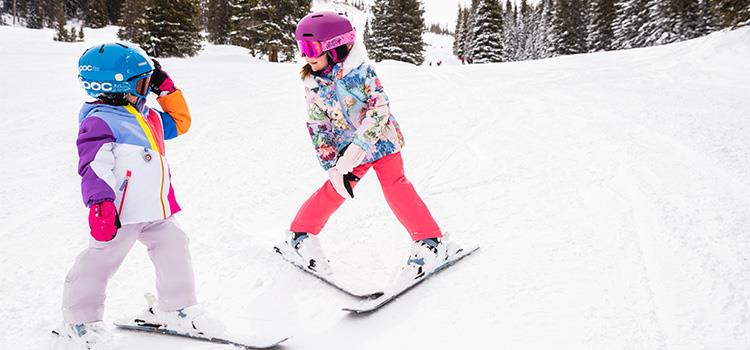
For toddlers around 3 and under, shorter skis are best. Keeping skis closer to chest or shoulder height makes things a lot easier for everyone. At this age, it’s all about making things as simple as possible to build their love for skiing, and fun for everyone! Shorter skis are easier to move around in, lighter, and more manageable which is important as their fine motor skills are still developing.
Kids ages 4 to 6 typically do well with skis between shoulder and nose height. At this stage, they’re gaining their strength and balance, so something that is easier to control is important for growing their confidence on the mountain. For those younger or more cautious, stick with a shorter length. For those older and more confident, you can go with a longer ski.
For older kiddos 7 and up, their ski length will vary more depending on their ability and size. Most will fall somewhere between chin and forehead height, but this is where weight and skill level start to really matter.
- Toddlers: Shorter skis = better. At chest to chin height.
- 4 to 6 years old: Shoulder to nose height. Shorter is still better for younger, lighter, and more cautious skiers.
- 7 years and up: Chin to forehead height. Ski size is really dependent on ability level and weight.
When Should Kids Switch from Junior to Adult Skis?
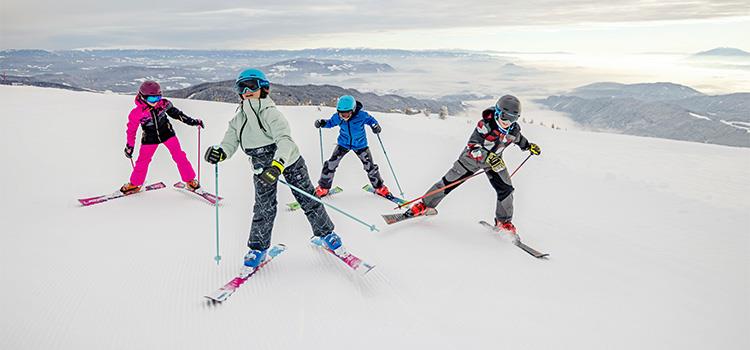
At some point, kids will outgrow junior skis altogether, and for most, that happens around the 100 to 120 pound range.
As kids get bigger and more confident on the mountain, adult skis can make a noticeable difference. They’re typically built with higher-quality, stiffer materials that provide better stability and performance across different snow conditions. This becomes especially helpful for kids who are skiing faster, exploring different terrain across the mountain, and starting to carve their turns with confidence.
Another big advantage is variety. Adult skis come in a much wider range of styles and performance levels, making it easier to find something that truly matches your child’s skiing style whether they’re sticking to groomers or starting to branch out to off-trail terrain.
Making the switch at the right time helps support their progression and keeps skiing feeling fun and controlled, rather than limiting.
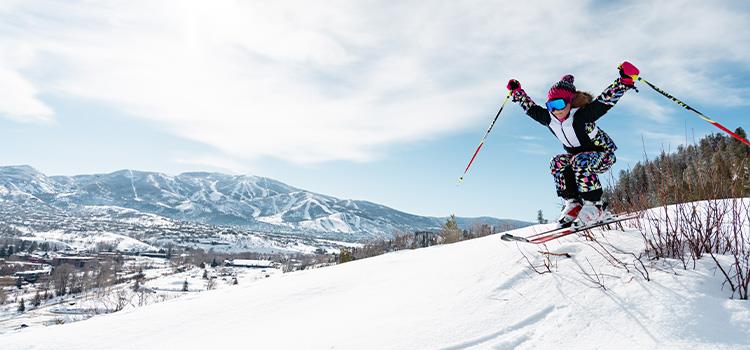
At the end of the day, there’s no need to stress over finding the “perfect” ski size. Kids grow quickly, and their skills evolve just as fast. As long as you stay within the general chest-to-nose range and factor in their ability, weight, and confidence, you’re making a great choice.
The goal isn’t perfection, it’s helping your kid feel comfortable, in control, and fall in love with skiing, just like you did.
Categories:
Skiing & Snowboarding
Tagged: Skiing, How To Choose