Taking your kids skiing or snowboarding for the first time is a big milestone—and it’s one of those moments you’ll remember forever. But let’s be honest: it’s also a lot of work. Between cold fingers, tricky gear, and snack-fueled meltdowns, things can get overwhelming fast.
That’s why a little preparation goes a long way. If you're figuring out how to teach kids to ski or snowboard for the first time, these parent-tested tips will help the day go smoother for everyone.
- Try on Their Ski Gear at Home
Before you even think about hitting the slopes, do a dress rehearsal at home. The hustle and bustle of a ski lodge in the morning can be intimidating for anyone, so help your kiddos get acclimated with their ski and snowboard gear before you make your way to the mountain.
Ski boots and snowboard boots can feel weird and clunky, especially for toddlers and young kids. Let them try everything on in the comfort of your living room. Practice putting on boots, walking around, and even getting into and out of bindings.
Pro tip for ski boots: Have your child push the tongue of the boot down toward the toe when stepping in, then pull it up to slide the foot in more easily.
For snowboarders: Help them sit down and strap into their bindings. Show older kids how to roll to their knees and push up—this gives them better balance and helps them dig in their toe edge so they don’t slide away.
Once they’ve got the boots down, it’s time to practice getting in and out of the bindings.
For skis, remember to have the heel of the binding down before stepping in. Coach and help them line up their toe in the binding, then stomping their heel down. Show them how to get out of their bindings by pushing down on the heel of the binding to pop their boots out.
For snowboarders, if you're working out how to teach a kid to snowboard, this is a great place to start: help them sit down and strap into their bindings at home. For older kids, a quick and easy way to stand up on their own once strapped in is to start in the seated position, then roll over so they're facing the ground on their hands and knees, then walk their hands towards their toes to stand up. This allows them to dig their toe edge into the snow so the board doesn’t slide out from under them.
This dry run takes the pressure off and gets kids excited for their big day on snow. While you’re at it, have them try on their snow gear—jackets, pants, gloves, helmets, and goggles—to make sure everything fits properly.
- Dress For Success
Like with all winter activities with kids, it’s essential to keep them warm and dry.
Start with a warm baselayer to keep them insulated and provide moisture management. Sets like these from Burton make it super easy and come in a ton of fun prints.
On super cold days, add a midlayer like a zip-up fleece for added warmth.
Finish off the fit with a waterproof jacket and pants combo, or even go for a bib or one-piece snowsuit for extra protection and warmth.
Don’t forget key accessories like gloves or mittens, merino wool ski socks, a hat for going to and from the mountain, a helmet to keep them safe, and a neck gaiter to keep any cold air from getting in.
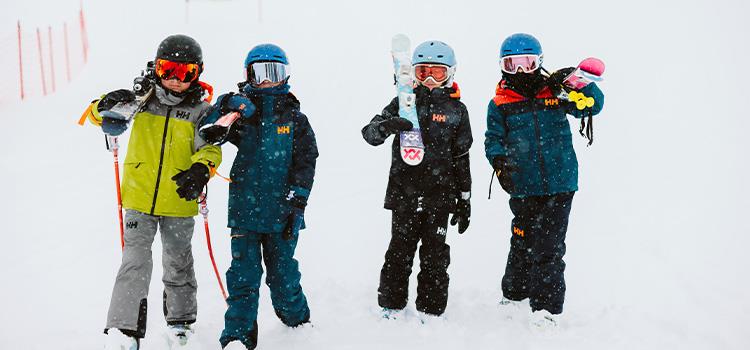
Here are some tips for dressing your kids to stay warm in the snow:
- Gloves or mittens: Ensure the glove or mitten cuff is long enough to cover the jacket sleeve or is worn under wrist gaiters to keep snow and cold air out.
- Mitten Clips: For the kid who loses everything, get a set of mitten clips to connect gloves or mittens to their jacket sleeve so you don’t have to worry about them getting lost and spending time scouring the mountain for them.
- Snow pants: Pull pant gaiters down around the boots to block out snow.
- Helmet and goggles: The helmet should sit snugly on the head, above the eyebrows. Have your kid hold the goggles up to their eyes while you stretch them up and over their helmet.
Check out our guide on How to Layer to help you choose the right layers.
- Handy Beginner Tools for Kids
Especially for small kids, a harness can be super helpful on the mountain. During their first few times skiing or snowboarding, you’ll find little kids spend a lot of time on the ground. Whether it's after taking a fall or they’re just too tired to stand up, a harness comes in handy to lift your toddler back to their feet.
They’re also super helpful once your kid is ready to ride the lift. It’s helpful to lift little ones up onto the chair when loading, offers another point of contact for parents while riding the lift, and helps with offloading. Some harnesses, like the MDXOne Harnesses, have a leash you can use once you’re kids start to pick up speed and prevent them from getting too far away from you.
For Skiers: One of the best inventions for young, beginner skiers is an edgie wedgie. The edgie wedgie connects the tips of the skis together to help kids keep their skis in a snow plow or pizza position. This is important for controlling speed and super beneficial for little ones that don’t yet have the coordination to hold the snow plow wedge.
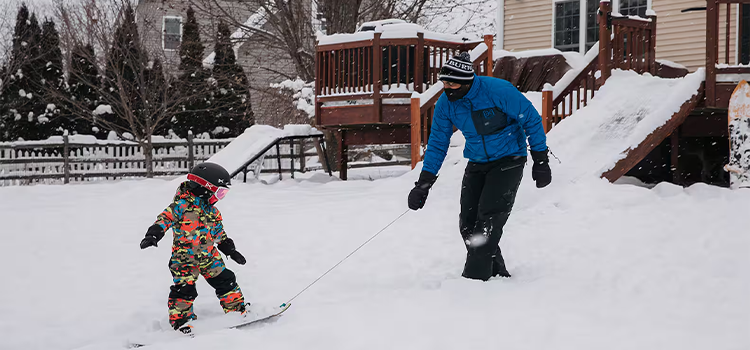
For Snowboarders: For little boarders, the Burton Riglet Reel is an awesome beginner learning tool. It’s a small retractable reel that can be attached to the end of a snowboard to pull your toddler around on the snow. This is perfect for helping them get a little speed in the beginner area or pulling them over small features.
- Prep Before You Go
A smooth ski day starts at home. Make a checklist of everything your family needs, and pack extras for unexpected surprises.
Get your list together:
Not sure what to bring? Check out our Ski Gear Checklist for a full list of everything to bring for a day of skiing and snowboarding.
- Check Out the Mountain Ahead of Time
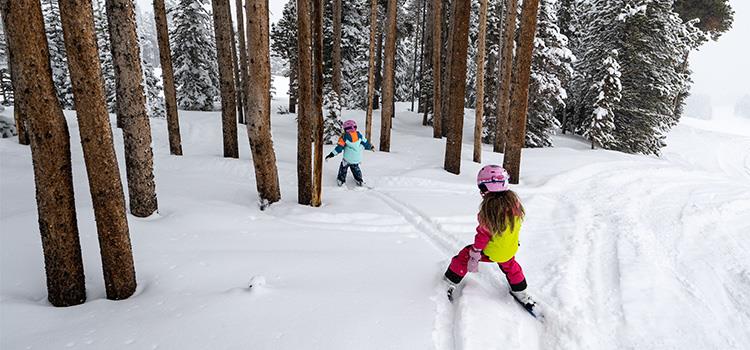
A local mountain with a good beginner area is always a good choice for your kids' first time skiing or snowboarding. Look for a ski area with a dedicated bunny slope, magic carpet, and beginner lift area. Get familiar with the trail map so it’s one less thing to think about on the day of.
If you’re planning on enrolling your kids in ski and snowboard lessons, be sure to check out the lessons ahead of time. Some mountains may have a weekly lesson that you can enroll your kids in, or offer lift tickets and rental packages with their lesson.
Don’t forget to get lift tickets online before you get to the mountain to save yourself time and money if you can. And look for any special deals. Some mountains offer free lift tickets to toddlers, and some may offer reduced lift tickets for just the beginner area.
- Keep Expectations Realistic (And Fun!)
Your child’s first time skiing or snowboarding won’t be perfect—and that’s okay. There will be falls, breaks, snacks, more breaks, and probably a little whining.
Plan for a short day on the mountain, especially with toddlers. Even 1–2 hours on snow is a great success. The goal isn’t to turn them into pros overnight—it’s to help them fall in love with skiing or snowboarding so they’ll want to come back.
Take breaks for hot chocolate. Laugh when they fall in the snow. Celebrate the small wins. And most importantly, end the day on a high note.
Final Thoughts
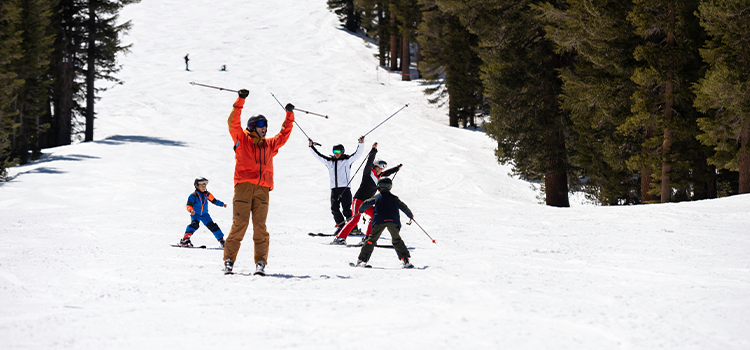
Knowing how to teach kids to ski or snowboard for the first time is challenging—but incredibly rewarding. These first days on snow might be slow, but they lay the groundwork for family ski trips you’ll all cherish for years.
So pack your snacks, take a deep breath, and get ready for some magical memories on the mountain.