 The Parent's Guide to Buying Kids' Ski Boots: Size, Fit & Flex Explained
The Parent's Guide to Buying Kids' Ski Boots: Size, Fit & Flex Explained
Posted
by
Bianca Chang
on Friday, July 31, 2026
To size up or not to size up? It’s one of the most common questions ski parents ask when purchasing thor kid’s next pair of ski boots. Or maybe you're just overwhelmed with all the options and not sure where to start. Either way, this one’s for you.
Choosing the right ski boots for your child is one of the most important gear decisions you’ll make each season. The truth is, the right kids’ ski boots can make or break a day on the mountain. A kid whose feet hurt or who feels sloppy in their boots is going to struggle to progress and more importantly, struggle to have fun. Here’s everything you need to know to find the best ski boots for your kid.
Nailing Down Ski Boot Size
Ski boots use a sizing system called Mondopoint. It was created by the ski industry to standardize ski boot sizes based on the actual length of your foot in centimeters. Since shoe sizes vary widely across brands, it’s always best to base your kid’s ski boot size on their true measurements.
How to measure ski boot sizes at home: have your child stand on a piece of paper with their heel flat against a wall. Make sure they're standing and fully weighted on their feet. This gives you the most accurate measurement. Mark the farthest point of their toes and measure the length in centimeters. If there’s a slight difference between their feet, use the larger foot. Their centimeter measurement corresponds directly to Mondopoint, so there's no conversion needed.
| Shoe Size (US) |
Foot Length (cm) |
Recommended Mondopoint Size |
| 8 |
14 - 14.5 |
15.5 |
| 9 |
15 - 15.5 |
16.5 |
| 10 |
16 - 16.5 |
17.5 |
| 11 |
17 - 17.5 |
17.5 |
| 12 |
18 - 18.5 |
18.5 |
| 13 |
19 - 19.5 |
19.5 |
| 1 - 1.5 |
19.5 - 20 |
19.5 - 20.5 |
| 2 - 2.5 |
20 - 20.5 |
20.5 |
| 3 - 3.5 |
21 - 21.5 |
21.5 |
| 4 - 4.5 |
22 - 22.5 |
22.5 |
| 5 - 5.5 |
23 - 23.5 |
23.5 |
| 6 - 6.5 |
24 - 24.5 |
24.5 |
| 7-7.5 |
25 - 25.5 |
25.5 |
| 8 - 8.5 |
26 - 26.5 |
26.5 |
| 9 - 9.5 |
27 - 27.5 |
27.5 |
Getting the Right Ski Boot Fit
When it comes to kids' ski boots, comfort is everything. The good news is that a properly fitted ski boot is almost always a comfortable one, so the two go hand in hand.
A well-fitting ski boot should feel snugger than a sneaker, but not so tight that your kid is begging to take them off after the first run. As any ski parent knows, an uncomfortable boot has a way of ruining a perfectly good day on the mountain faster than just about anything else. Getting the fit right from the start is everything.
How to Test Ski Boot Fit:
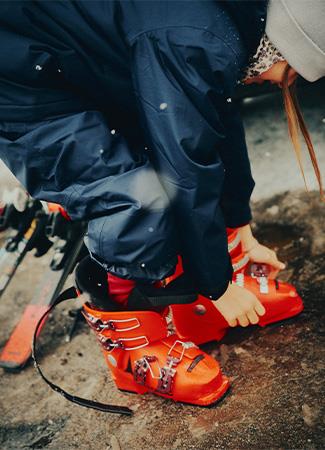
The best way to test the fit of a kids’ ski boot is to try on the boot with it fully buckled. The top buckles around the upper cuff should be as tight as comfortably possible. This keeps their foot back in the boot where it belongs.
Once buckled, run through this quick fit test:
When they stand tall with their knees relatively straight, ask them if their toes are curled or flat and if their toes can feel the front of the boot. Their toes should be completely flat and be able to lightly touch the front of the boot.
Next, ask them to flex forward in the boot by bending their knees and pressing their shins into the boot. As they flex the boot, their toes should come away from the front of the boot giving them a little room to wiggle.
At any point, if their toes are curled, that’s a good indicator that the boots are too small. If they can’t feel the front of the boot when standing tall, it may be too big.
Fitting Tips for Little Kids:
Let's be real, asking a toddler to report how their foot feels in a ski boot won’t get you very far. A trick that works really well when you're trying to figure out toddler ski boot fit is to pull the liner out of the boot and have them stand in just the liner. That way you can physically feel exactly where their toes end. Make sure their heel is all the way back in the liner and you’ll be able to tell right away if their toes are pushed right up to the front or if their boots have too much room. Then pop the liner back in the shell, have them try the boots on, and make sure they can walk around comfortably.
At this age, most little ones will only spend an hour or so on the snow, so as long as they're warm and comfortable, you're in good shape. As they get older and more serious about skiing, a more precise fit will become important. But for now, fun is the goal.
When to Size Up Kid's Ski Boots
To size up or not to size up? You might consider sizing up if your child is between sizes, they’re in the middle of a growth spurt, or you’re looking to get an extra season out of them. That said, it’s important to not go too big. Too much room means their feet will slide around in the boot, leading to poor control, less confidence, and more frustration on the snow. None of which makes for a fun ski day.
For more advanced junior skiers, it’s best to stick with their measured size. This is going to give them the best performance and control while on the mountain.
Kid's Ski Boot Flex
Ski boot flex refers to how stiff a boot is, or how much effort it takes to bend the boot forward. For most young skiers, flex isn't something you'll need to stress over. The majority of children's ski boots are built with a softer flex that works well for newer and lighter skiers who are learning and building their confidence on snow. Some junior ski boots, like the Nordica Speedmachine J series, have a weight adjustment feature that lets you dial in the flex as your child grows.
Generally speaking, the higher the ability level and body weight, the stiffer the flex a young skier can handle. For advanced junior skiers, slightly stiffer boots in the 60 to 80 flex range are worth exploring. Just keep in mind that jumping to a stiffer boot too soon can actually work against them. If they struggle to flex the boot, they will struggle to learn how to properly ski.
When to Switch from Junior to Adult Ski Boots
At some point, you'll start wondering when it's time to make the jump to adult ski boots. The general guideline is once they hit the 100–120 pound mark, but weight alone isn't the whole story.
Skiing ability plays a big role too. Advanced and aggressive young skiers benefit from a stiffer flex that adult ski boots offer. On the other hand, a newer, more timid skier who barely hits 100 lbs might be better off staying in a junior ski boot a little longer.
Another factor to consider is height. You don't want the upper cuff of an adult boot swallowing their entire lower leg. A good rule of thumb is that the cuff should cover no more than two-thirds of their lower leg.
One important note before making the switch to adult ski boots: check binding compatibility. Certain kids' ski bindings won't work with adult ski boots due to differences in the boot soles. Some junior boots are compatible with adult bindings and vice versa, but don't assume. Check with one of our ski experts or your local shop before making the switch if you’re unsure.
FAQs
How long can I expect my kid’s ski boots to last?
It really depends on how fast your child grows. Most parents find themselves replacing kids’ ski boots every one to two seasons. Before each season, don’t forget to do a quick check at home to make sure boots fit rather than finding out at the mountain!
Their toes are cold, should I double up their ski socks?
It’s tempting, but wearing two socks while skiing is not the move. Too much material inside the boot takes up too much room throwing off the fit and actually restricting circulation, making feet colder instead of warmer. Instead, invest in a good pair of wool or synthetic ski socks that come up above the boot cuff. This will prevent the boots from pinching while keeping their feet warm even if things get wet out there.
My kid says their ski boots hurt. What should I do?
Start by checking the basics: make sure they're wearing proper ski socks (pulled all the way up with no bumps or wrinkles. Even a small wrinkle can cause real discomfort), that they're in the right size boot, and that everything is buckled correctly. Check that the tongue of the liner is lying flat against their shin and the liner is wrapped snugly around their leg before closing the buckles.
If they're still having trouble, and the pain is in a specific spot, it may just need a minor adjustment. A local boot fitter can assess the fit and make adjustments to relieve any discomfort.
Buying ski boots for your kids doesn't have to be stressful. Measure their feet, aim for a snug and comfortable fit, match the flex to their ability level, and lean on ski experts at WinterKids or your local shop. Get the boots right, and the rest of the day takes care of itself. Now get out there and enjoy the mountain together!
Categories:
Skiing & Snowboarding
Tagged: Skiing, How To Choose, Ski Boots